

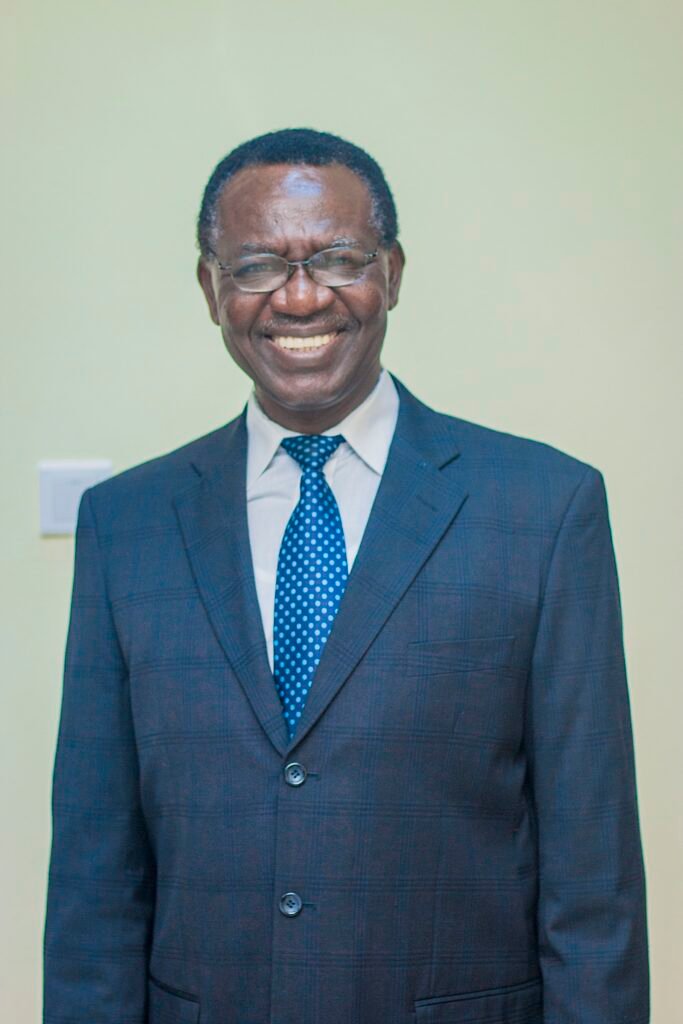
By Saidu Abubakar
The recent appraisal of President Bola Tinubu’s economic reforms by former President Olusegun Obasanjo as reported in the media, has attracted the reaction of Prof. Wumi Iledare, who is a renoun petroleum economist.
The Professor Emeritus told Valuechain in his reaction with utmost respect to the former president that, “I consider his assessment of Nigeria’s economic reforms incomplete. It is ironic to assess the state of Nigeria’s economy today without examining where it stood in 2020 and the economic and structural shocks that have accumulated since then.
“Yes, subsidy removal and exchange-rate unification have imposed severe adjustment costs on Nigerians,” Iledare who is a member of the executive governing council, a former Vice President of Finance, the 2013 President-Elect and the 2014 President of the International Association for Energy Economics (IAEE) said.
The resulting inflation and erosion of purchasing power, Prof. Iledare affirmed, “are real, and no serious economist should dismiss them. But to attribute Nigeria’s position as a poverty capital primarily to these two reforms is an oversimplification.”
He also noted that correlation is not causation, and an economic diagnosis must consider the counterfactual: “what would Nigeria’s economy look like today if the reforms had not been implemented?”
The COVID-19 shock, longstanding fiscal weaknesses, exchange-rate distortions, declining purchasing power, weak productivity, inadequate infrastructure, and persistent challenges in domestic production, he further added, all form part of the broader context, insisting that the effects of reforms must also be distinguished from the inherited structural problems they were intended to address.
The irony is that these are two signature reforms that President Obasanjo himself had reason to support in principle during his presidency. Their economic rationale—reducing the fiscal burden of subsidies and correcting exchange-rate distortions—did not originate with the Tinubu administration.

“That does not mean the implementation was flawless or that the social costs were adequately managed. Removing subsidies and unifying exchange rates are not ends in themselves. Their ultimate justification lies in whether they improve resource allocation, stimulate productive investment, strengthen public finances, and deliver sustainable improvements in citizens’ welfare,” he further clarified.
Prof. Iledare stressed that his concern is not with criticising the reforms; it is with judging them without a sufficiently rigorous economic framework.
The relevant questions are these: “What were the costs of maintaining the previous regime? What have the reforms cost Nigerians? What benefits have materialized? Who has gained, who has lost, and what complementary policies are needed to protect vulnerable households and stimulate production?”
He said that these are the questions that deserve serious engagement.
He stated that Nigeria needs accountability, not economic apologetics. But it also needs economic analysis that distinguishes between the pain of adjustment, the failures of implementation, and the structural weaknesses that predate the reforms.
“We must judge the reforms by their outcomes, but we must also judge them against the economic realities they inherited and the alternatives available,” he concluded.
