
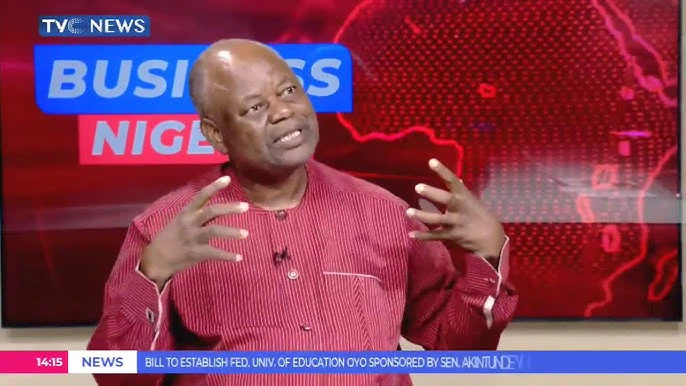
Professor Ken Ife says Nigeria should carefully reconsider its continued membership of the Organization of the Petroleum Exporting Countries, arguing that the country must place its long term economic interests and expanding refining capacity ahead of existing oil production arrangements.
Speaking during an interview on Business Nigeria, the development economist maintained that leaving OPEC remains a legitimate option, pointing to countries that have already taken similar decisions.
He also explained why falling global crude oil prices do not always result in immediate reductions in petrol prices across Nigeria.
According to official YouTube channel of TVC on Thursday, June 9, 2026, Ife said there is no direct relationship between crude oil prices and retail fuel prices because several market forces influence the final cost.
He explained, “The thing is not a one to one linear relation,” adding that import costs, replacement pricing, insurance premiums, transportation expenses, and international conflicts all affect pump prices.
He noted that refiners and marketers often purchase crude at earlier, higher prices, meaning consumers may not immediately benefit when global oil prices fall.
The economist also argued that Nigeria should consider setting domestic crude prices independently by prioritizing local refining.
He stated, “If Nigeria was to be out of OPEC then we wouldn’t worry about what happens with the OPEC price.”
“It’s reasonable to expect that there will be a bit more reductions on the price.”
Citing international examples, he added, “Of course if UAE is out, Angola is out, many others, more than five countries are out.”
According to Ife, countries that have left OPEC are better positioned to determine domestic refining prices while continuing to export crude at internationally competitive rates.
Highlighting Nigeria’s growing refining industry, Ife said the country should focus on expanding value addition instead of relying mainly on crude exports.
He argued that increasing refining capacity through projects such as the Dangote Refinery and the rehabilitation of state owned refineries could strengthen investment, create jobs, and improve energy security.
He also urged authorities to promote the Gulf of Guinea as a major energy hub while enforcing policies that prioritize crude supply to domestic refineries before exports.
He insisted, “OPEC has no more relevance to this country. I’m telling you the truth.”
While acknowledging that petrol prices could ease over time, he cautioned that reductions would not happen immediately because transportation, insurance, replacement costs, and geopolitical tensions continue to influence market prices.
SOURCE: PoliticalNewsHub
