As fuel demand surges, Africa must decide whether to build its own refining future or remain vulnerable to global supply shocks
By William Emmanuel Ukpoju
Africa is standing on the edge of a quiet but profound energy crisis, one that is not arriving suddenly, but building gradually through decades of structural imbalance. By 2040, the continent could face a fuel shortfall of about 86 million tonnes, according to a recent report by the Africa Finance Corporation. The figure is not just a statistical projection; it is a warning about the direction of Africa’s industrial future, its economic stability, and its ability to compete in a rapidly shifting global energy landscape.
At its core, the issue is not that Africa lacks oil. In fact, the continent is home to some of the world’s most significant hydrocarbon reserves and remains a major crude oil producer. The real contradiction lies in what happens after extraction. Africa exports large volumes of crude oil but imports most of the refined petroleum products it consumes. In practical terms, this means that while Africa generates energy wealth, it does not fully capture the value chain that turns that wealth into economic power. The result is a structural dependency that has persisted for decades, quietly draining foreign exchange, constraining industrial growth, and exposing economies to external shocks.
The projected 86 million tonne gap by 2040 reflects not just rising demand but also a deepening mismatch between production capacity and consumption needs. Africa’s population is expected to continue growing rapidly, urbanisation is accelerating, and industrial ambitions under frameworks like the African Continental Free Trade Area are expanding. All of these trends increase energy demand significantly. Yet refining capacity across much of the continent has not kept pace. Many refineries are either outdated, operating far below capacity, or have been shut down entirely due to inefficiency, mismanagement, or lack of investment. In some cases, countries that once had functioning refineries now rely almost entirely on imports.
This dependency creates a fragile system that is highly exposed to global disruptions. Recent geopolitical tensions in major oil transit regions have shown how quickly global supply chains can be affected. For African countries that rely heavily on imported refined products, even minor disruptions in global shipping routes or price fluctuations in international markets can translate into immediate domestic consequences. Fuel shortages, inflation spikes, and transport disruptions become not distant possibilities but recurring realities.
The economic implications of this dependency are far-reaching. Fuel is not just another commodity; it is a foundational input that underpins nearly every sector of the economy. When fuel prices rise or supply becomes unstable, the effects cascade through transportation, manufacturing, agriculture, and services. Transport costs increase, making food and goods more expensive. Industrial production becomes costlier and less competitive. Farmers face higher logistics and input costs, while households bear the burden through rising living expenses. Inflation becomes structurally embedded, not as a temporary shock but as a persistent condition.
Perhaps one of the most significant consequences is the pressure on foreign exchange reserves. African countries collectively spend tens of billions of dollars annually importing refined petroleum products. This creates a continuous outflow of scarce foreign currency, weakening local currencies and increasing vulnerability to external financial shocks. For economies already struggling with limited export diversification, this dependence on fuel imports becomes a major constraint on macroeconomic stability.
The fiscal impact is equally significant. Many governments are forced to intervene through fuel subsidies in an attempt to cushion domestic consumers from global price volatility. While politically necessary in many contexts, these subsidies place enormous strain on national budgets. Funds that could otherwise be invested in infrastructure, healthcare, education, or industrial development are redirected toward stabilising fuel prices. Over time, this creates a cycle where short-term relief undermines long-term development capacity.
What makes the situation more complex is that Africa’s fuel challenge is not simply about consumption; it is about missed industrial opportunity. Refining crude oil domestically is not just a technical process; it is a value creation process. It generates jobs, builds industrial expertise, stimulates petrochemical industries, and strengthens energy security. By exporting crude and importing refined products, Africa effectively externalises these benefits. The continent supplies raw materials to global markets while paying a premium to re-import finished goods.
This pattern has broader implications for Africa’s industrialisation agenda. Under initiatives like the African Continental Free Trade Area, there is a strong ambition to boost intra-African trade and build regional value chains. However, such ambitions require stable and affordable energy. Without a reliable fuel supply, manufacturing hubs cannot operate efficiently, logistics networks remain weak, and cross-border trade becomes more expensive. In this sense, the fuel deficit is not just an energy issue; it is a structural barrier to economic integration.
At a deeper level, the fuel dependency problem also reflects a question of economic sovereignty. Energy security is a fundamental pillar of national autonomy. Countries that control their energy supply chains are better positioned to make independent policy decisions, attract investment, and respond to global shocks. Conversely, countries that rely heavily on imports are exposed to external pricing systems and supply decisions over which they have limited influence. Africa’s current position limits its strategic flexibility and reinforces external dependence.
However, the impact of the projected fuel shortfall will not be uniform across the continent. Different regions face different levels of vulnerability. East Africa, for instance, is particularly exposed due to its heavy reliance on imports and relatively limited refining infrastructure. Supply chains in this region are also constrained by geography and transport logistics. West Africa, despite being a major oil-producing region, still struggles with refining inefficiencies and infrastructure gaps, even as new private sector-led projects begin to emerge. Southern Africa faces a different set of challenges linked to ageing infrastructure and electricity constraints, while North Africa is comparatively more advanced in refining capacity but still vulnerable to global market volatility.
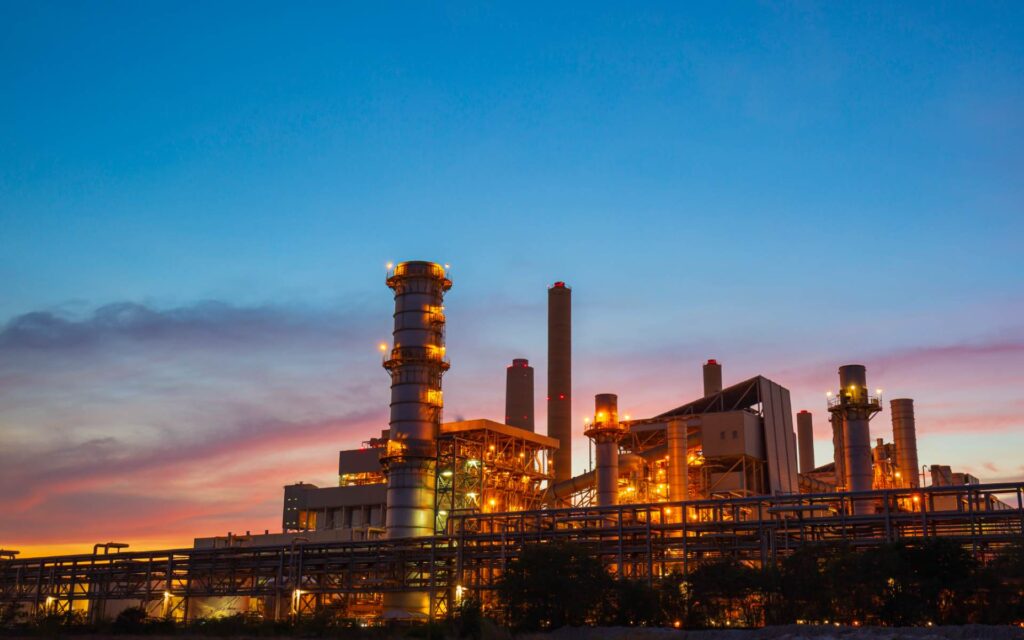
Amid these challenges, there are emerging signs of transformation. One of the most notable developments in recent years is the rise of large-scale private sector investments in refining capacity. Projects such as the Dangote Refinery represent a shift in how Africa approaches energy infrastructure development. Instead of relying solely on state-owned facilities, there is a growing recognition that private capital, combined with regulatory support, can deliver large-scale, efficient energy infrastructure. Such projects have the potential to significantly reduce import dependence, particularly within regional markets.
Yet even these developments, as significant as they are, cannot alone close the projected gap. The scale of the 86 million tonne shortfall implies that Africa would need multiple large refineries across different regions, supported by extensive distribution networks, storage facilities, and integrated transport systems. Energy infrastructure is not just about production; it is about connectivity and efficiency across the entire value chain.
This is where infrastructure emerges as the central challenge. Africa’s energy system is fragmented. Pipelines are limited, storage capacity is uneven, and regional integration is weak. In some cases, countries located near each other operate entirely separate and uncoordinated fuel supply systems. This fragmentation increases costs and reduces resilience. Even where infrastructure exists, it is often underutilised or poorly maintained.
The broader consequence is that Africa’s energy inefficiency extends into other sectors, including agriculture. Fertiliser production, for example, is closely linked to energy availability. When fuel and gas supplies are constrained, fertiliser production becomes more expensive or limited, directly affecting agricultural productivity. This creates a ripple effect that eventually impacts food security. Rising fuel costs lead to higher food prices, which in turn increase pressure on households and governments alike. The connection between energy and food systems is therefore direct and deeply interdependent.
Another dimension that cannot be ignored is the global energy transition. As the world gradually moves toward cleaner energy systems, Africa finds itself in a complex position. On one hand, there is pressure to align with global decarbonisation goals. On the other hand, the continent still faces significant energy access gaps, with millions of people lacking reliable electricity and modern energy services. In this context, refined petroleum products will continue to play a critical role for decades, even as renewable energy expands. The challenge for Africa is not an abrupt transition, but a managed and balanced energy evolution.
Addressing the projected fuel shortfall will require substantial investment, potentially in the hundreds of billions of dollars. But investment alone is not enough. What is equally important is policy consistency, regulatory clarity, and regional cooperation. Investors are more likely to commit capital where there is stability and predictability. Fragmented policies and inconsistent regulations have historically discouraged large-scale infrastructure development in the energy sector.
This is where regional frameworks such as the African Continental Free Trade Area become important again. If properly leveraged, they can serve as platforms for energy integration, allowing countries to share infrastructure, harmonise regulations, and develop regional refining hubs. Such cooperation would reduce duplication, improve efficiency, and strengthen collective resilience against global shocks.
Ultimately, the projected 86 million tonne fuel shortfall is not just a forecast; it is a mirror reflecting Africa’s unfinished industrial journey. It reveals a continent that is rich in resources but still constrained by structural inefficiencies. Yet it also presents an opportunity. If addressed strategically, the fuel gap could become a catalyst for industrial transformation, driving investment into refining, infrastructure, and energy integration.
The choice before Africa is therefore not simply about managing a shortage. It is about deciding whether to remain a passive participant in global energy systems or to actively build a self-reliant and integrated energy future. The decisions made in the next decade will determine whether the continent continues to import energy dependency or builds the foundations of energy sovereignty.
In the end, the fuel question is not just about barrels, tonnes, or imports. It is about whether Africa can power its own development on its own terms.