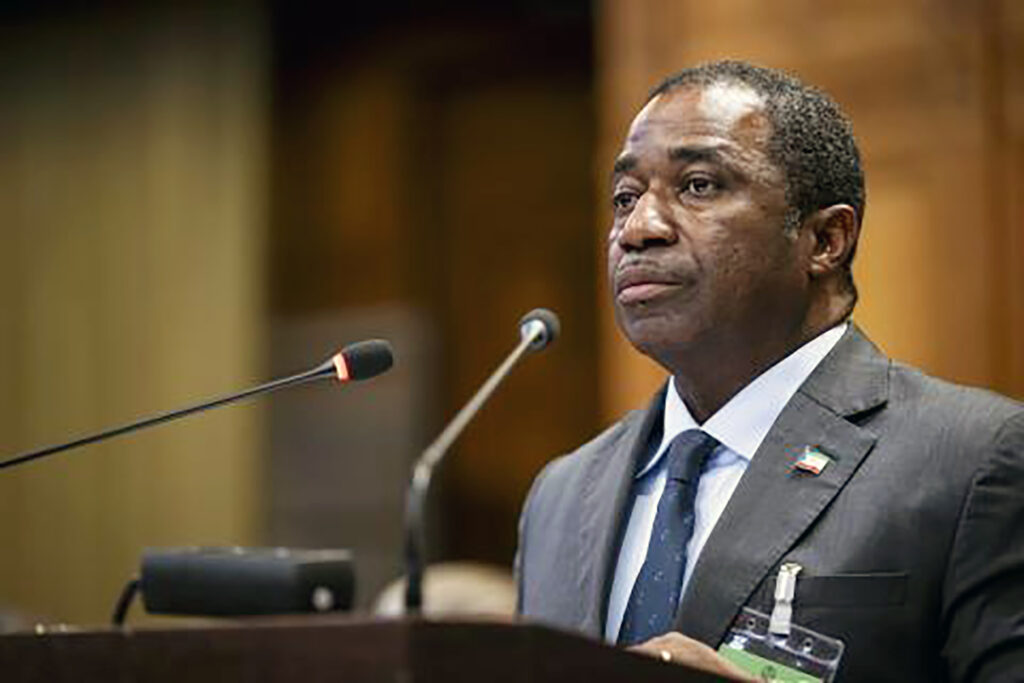
An Exclusive Interview with Domingo Mba Esono, Minister Delegate of Hydrocarbons and Mining Development, Republic of Equatorial Guinea
At the 9th edition of the Nigeria International Energy Summit in Abuja, Valuechain Energy Magazine sat down with Domingo Mba Esono to discuss deepening hydrocarbon cooperation between Nigeria and Equatorial Guinea, gas monetisation strategies, local content development, and Africa’s pathway out of energy poverty.
The interview underscores a growing strategic alignment between Nigeria and Equatorial Guinea in gas monetisation, infrastructure development, local content advancement, and continental financing. With frontier exploration underway and a new licensing round forthcoming, Equatorial Guinea signals renewed ambition, anchored in regional cooperation.
As Africa recalibrates its energy priorities, partnerships like this may well define the continent’s next chapter in hydrocarbon development and energy security.
Honourable Minister, thank you for speaking with us. Kindly introduce yourself and share a brief overview of your professional background.
Thank you very much for this opportunity. My name is Domingo Mba Esono. I am the Minister Delegate of Hydrocarbons and Mining Development of Equatorial Guinea. I was appointed to this position in 2023, having previously served as Vice Minister.
By background, I am a mining engineer and surveyor, with further specialisation in petroleum engineering from several universities internationally. Over the years, I have held multiple leadership roles within the Ministry of Mines and Energy.
When our national oil company, GEPetrol, was created by decree in 2001, I was appointed its first Director General. I was deeply involved in restructuring and launching the company into the market. During that period, we promoted exploration initiatives, including the discovery of the Safiro-1 field, and participated in the development of key hydrocarbon projects.
We also developed LNG Train 1 and established EG LNG to support gas monetisation. In logistics, we facilitated the establishment of the Luba Freeport, a deep-water port dedicated to servicing the offshore industry.
These early reforms positioned Equatorial Guinea strongly within the regional hydrocarbon landscape. Returning to the Ministry in 2023, we now face new challenges, particularly revitalising exploration and attracting investment into frontier and ultra-deepwater blocks.
Recently, President Bola Ahmed Tinubu visited Equatorial Guinea, where several Memoranda of Understanding were signed. What is the current status of those agreements?
President Tinubu’s visit to Malabo marked an important milestone in strengthening bilateral ties. Cooperation between our countries is not new. As far back as the early 2000s, we successfully implemented a unitisation agreement for the northern extension of the Safiro field, involving Block B in Equatorial Guinea and OML 102 in Nigeria. That collaboration, previously operated by ExxonMobil, demonstrated how cross-border resource management can benefit both nations.
Today, the new MoUs expand this cooperation, particularly in gas development. One of the most strategic areas is stranded and flared gas in Nigeria’s deepwater environment. Equatorial Guinea has processing capacity on Bioko Island, and we are exploring the development of a pipeline network to transport Nigerian gas for processing and export.
This initiative aligns with Nigeria’s gas flare reduction commitments and represents both a medium- and long-term strategic partnership.
Nigeria positions itself as a gas-driven economy. In what specific areas are you seeking partnership on gas monetisation?
Our primary focus is on establishing a joint structure, potentially a special-purpose company, that will undertake pre-FEED, FEED, and full feasibility studies for the proposed gas pipeline network between Nigeria and Bioko Island.
This partnership would include stakeholders from both countries and potentially international investors. The project would generate employment across engineering, construction, operations, and support services.
The goal is clear: collect currently flared gas, process it economically, and export it to international markets while also supporting domestic energy needs.
You mentioned local content development. How central is technology transfer in this partnership?
Technology transfer is fundamental. Local content must extend across the entire value chain, from upstream exploration and pipeline construction to gas processing and downstream commercialisation.
Nigeria has made significant progress in developing institutional capacity, training programmes, and indigenous participation. Equatorial Guinea is developing its own training centres, and we intend to learn from Nigeria’s experience.
This cooperation will ensure that Africans build, manage, and operate African energy infrastructure.
What is your assessment of the role of the African Petroleum Producers’ Organisation (APPO) in advancing African energy financing and collaboration?
We are proud of Nigeria’s leadership within APPO. The organisation is working to consolidate African capabilities across regions.
A major milestone is the establishment of the Africa Energy Bank, which Nigeria has strongly supported by providing a hosting framework. This institution will help African nations finance major energy projects independently.
In partnership with institutions such as Afreximbank, the Africa Energy Bank will strengthen Africa’s financial autonomy in energy development. This aligns with broader continental goals under the African free trade framework, ensuring Africa develops its natural resources using African capital and expertise.
Energy poverty remains a pressing challenge. How can Nigeria and Equatorial Guinea collaborate to address this?
Energy poverty must be addressed pragmatically. We cannot discuss energy transition while millions of Africans lack electricity.
Gas remains a cleaner transitional fuel. Part of the gas cooperation between Nigeria and Equatorial Guinea will prioritise domestic supply, supporting electricity generation and industrialisation in both countries.
At the same time, we must deploy modern technologies that reduce environmental impact. Our cooperation will emphasise environmentally responsible gas production and processing.
Energy transition must be realistic and inclusive. Africa must first secure energy access before moving fully into advanced transition models.
Finally, Honourable Minister, is this your first visit to Nigeria?
No, I have been visiting Nigeria since 1997. I was actively involved in maritime boundary negotiations between our two countries. That process strengthened peace and stability and laid the foundation for today’s cooperation.
Nigeria feels like home. Our relationship is built on brotherhood and shared strategic interests.
That’s great! We look forward to discussing more angles with you when the opportunity presents itself. Valuechain Energy Magazine is grateful for your time, and we wish you a safe return to Equatorial Guinea.
Thank you.
