
By Anscella Obike
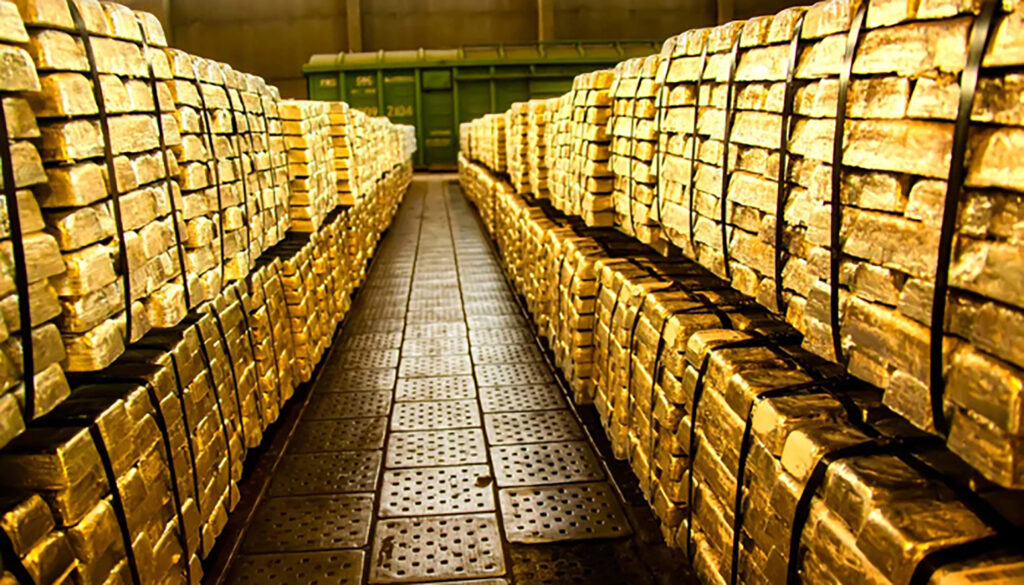
Nigeria’s solid minerals sector has rarely attracted as much public attention as it did following the announcement of a new gold refinery in Lagos. What should have been a milestone for private investment and value addition quickly turned into a heated national debate after the Northern Elders Forum (NEF) alleged that the Federal Government had sited a gold refinery in Lagos in violation of the federal character principle.
The Ministry of Solid Minerals Development has since moved decisively to clarify the matter, stressing that the refinery is not owned, funded, or established by the Federal Government but is instead a 100% private-sector initiative. Beyond setting the record straight, the episode has exposed deeper questions about public understanding of mining reforms, the role of private capital, and the political sensitivities surrounding industrial location in Nigeria.
Separating Policy from Private Investment
According to the ministry, the Lagos gold refinery is being developed by Kian Smith, a privately owned Nigerian mining company, as part of its commercial strategy to deepen local gold processing capacity. At no point, the ministry said, did the Minister of Solid Minerals Development, Dr. Dele Alake, announce a government-owned refinery or suggest that the Federal Government had chosen Lagos as a site for any such project.
This distinction is critical. Nigeria’s current solid minerals policy framework is explicitly private-sector-led, with the government positioning itself as a regulator, enabler, and facilitator, not an owner or operator of mining and processing assets.
Under this model, investment decisions, including location, are driven by market access, infrastructure availability, logistics, financing considerations and profitability. Expecting the Federal Government to compel a private company to site its operations in a particular region would contradict the very reforms designed to attract capital into the sector.
Value Addition at the Heart of Reform

The Lagos refinery sits squarely within the government’s value addition policy, introduced two years ago to curb the long-standing practice of exporting Nigeria’s minerals in raw form. For decades, gold, lithium and other strategic minerals left the country with minimal processing, depriving the economy of jobs, technology development and higher export earnings.
The policy shift has begun to show results. Beyond gold refining, the ministry points to major privately funded projects already underway, including a $600 million lithium processing plant in Nasarawa State, a $400 million rare earth elements facility also in Nasarawa, and a $200 million ASBA lithium plant in Abuja. Together, these investments signal growing confidence in Nigeria’s mining reforms and underscore the scale of capital required to build a viable downstream minerals industry.
From a Valuechain perspective, these projects represent more than isolated investments; they mark an attempt to reposition solid minerals as a serious contributor to Nigeria’s industrial and export base.
Politics Meets Industrial Reality
The reaction from the NEF illustrates how industrial developments can quickly become entangled in political and regional narratives. The ministry’s unusually sharp response reflects frustration that a private investment was framed as a government allocation decision, thereby mischaracterising both the nature of the project and the policy environment that enabled it.
At a deeper level, the controversy highlights a broader challenge facing Nigeria’s economic reforms: public discourse often lags policy reality. While government has shifted towards market-driven frameworks in mining, power, ports and energy, public expectations still frequently assume direct state control over asset location and ownership.
This mismatch creates fertile ground for misinformation and mistrust, particularly in sensitive sectors tied to national resources.
Why Lagos Makes Commercial Sense
From an investor’s standpoint, Lagos remains a logical choice for a gold refinery. The city offers proximity to financial services, export logistics, skilled labour, and international markets. For precious metals, access to secure transport, assay services, and export infrastructure is often as important as proximity to mine sites themselves.
Globally, refineries are not always located where minerals are extracted. Instead, they cluster around trade hubs, ports and financial centres. Nigeria’s mining reforms implicitly recognise this reality by focusing on enabling investment rather than prescribing geography.
Implications for the Mining Sector
The Lagos refinery episode serves as a test case for how Nigeria manages the next phase of its mining transition. If private investors perceive that projects can be politicised or misunderstood, confidence could be affected. Conversely, clear communication and consistent policy enforcement can strengthen investor trust.
For the government, the task ahead is twofold: continue improving the regulatory environment while also deepening public education on how private-led industrialisation works. Mining reforms cannot succeed if every new project is interpreted through the lens of state allocation or regional competition.
A Broader Economic Lesson
Ultimately, the controversy underscores a larger economic truth. Nigeria’s ambition to diversify away from oil depends on its ability to attract and retain private capital in sectors like mining, energy and manufacturing. That ambition requires allowing investors the freedom to make commercial decisions while ensuring transparent regulation and national benefit.
As the Ministry of Solid Minerals Development continues to promote processing and manufacturing across the country, the Lagos gold refinery may, in time, be remembered less for the controversy it sparked and more as an early symbol of Nigeria’s shift from mineral exporter to value creator.
For a sector long dominated by informality and underinvestment, that transition, if sustained, could be one of the most consequential economic reforms of the decade.
