

By William Emmanuel Ukpoju
As Nigeria edges closer to January 1, 2026, the scheduled commencement date of the Tax Laws, 2025, what was initially framed as a technical dispute has evolved into one of the most consequential governance controversies of the Tinubu administration. At stake is not just tax reform, but the credibility of Nigeria’s legislative process, the boundaries of executive authority, and public trust in democratic institutions.
The controversy, ignited by lawmakers in the House of Representatives, has now drawn in senior government officials, opposition leaders, and civil society organisations, transforming the issue into a national test of constitutional fidelity.

From Legislative Alarm to National Crisis
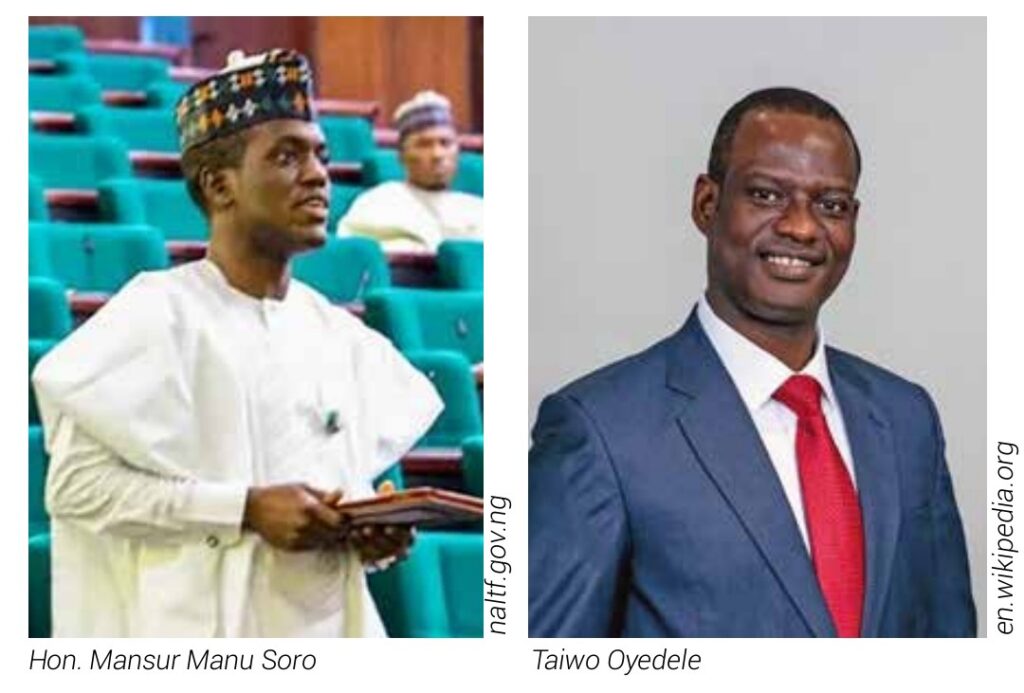
The storm began when Hon. Mansur Manu Soro, a lawmaker from Bauchi State, raised alarm over what he described as “material discrepancies” between the tax bills passed by the National Assembly and the versions later gazetted as law.
According to Soro, a comparison of the Votes and Proceedings of the National Assembly, the harmonised bills approved by both chambers, and the Official Gazette revealed alterations that went beyond clerical errors. He alleged that key oversight and reporting mechanisms approved by lawmakers were removed, while new coercive and fiscal powers, never debated by parliament, were introduced in the gazetted laws.
“These are deliberate alterations,” Soro warned, describing the situation as a constitutional breach. Under Nigeria’s Constitution, legislative authority rests squarely with the National Assembly, and any post-passage modification that alters the substance of a law undermines that authority.
Why These Tax Laws Matter
The Tax Laws, 2025, represent the most ambitious overhaul of Nigeria’s tax system in decades. Signed into law by President Bola Tinubu, the reforms consolidate tax administration under a single authority, the Nigeria Revenue Service, and are designed to improve revenue mobilisation, streamline compliance, and modernise fiscal governance.
The four laws: the Nigeria Tax Act, the Nigeria Tax Administration Act, the Nigeria Revenue Service (Establishment) Act, and the Joint Revenue Board (Establishment) Act, are central to the government’s economic reform agenda at a time of fiscal strain, rising debt obligations, and declining oil revenues.
Any uncertainty surrounding their legality, therefore, carries far-reaching consequences for businesses, investors, state governments, and ordinary taxpayers.

House Moves to Investigate, But Clock Is Ticking
In response to the allegations, the House of Representatives constituted an ad hoc committee to investigate the discrepancies. While Soro welcomed the move, he raised concerns about the committee’s one-week reporting timeline, which reportedly expires on December 25, Christmas Day and a public holiday when the House does not sit.
With lawmakers set to proceed on Christmas and New Year recess, Soro and like-minded colleagues are pushing to raise the issue on the floor of the House on December 23, 2025, under a Matter of Urgent National Importance, the final sitting before the break.
The urgency, lawmakers argue, is not political theatrics but constitutional necessity. Allowing disputed laws to take effect without resolution risks judicial challenges, regulatory confusion, and erosion of legislative authority.
Executive Response: A More Nuanced Position
As pressure mounted, the Chairman of the Presidential Fiscal Policy and Tax Reforms Committee, Taiwo Oyedele, stepped into the debate, offering a more nuanced response that neither fully dismisses nor fully endorses the lawmakers’ claims.
Oyedele acknowledged that aspects of the version passed by the National Assembly may require amendments, particularly around referencing and definitions. However, he stopped short of supporting a wholesale suspension of implementation.
“Even if it is established that there have been substantial alterations to what the National Assembly passed, my view is to identify those provisions which are not part of the law and proceed to implement the law as passed by NASS,” Oyedele said, while addressing how such issues arose and how they should be corrected.
His position suggests a preference for damage control rather than disruption, proceeding with implementation while isolating and correcting contentious provisions through amendments initiated by the President.
A Question of Access and Authority
Oyedele also raised a critical procedural issue that complicates the controversy: access to the definitive version of the bills passed by the National Assembly.
Echoing concerns earlier raised by Rep. Abdulsamad Dasuki, Oyedele noted that the harmonised bills certified by the Clerk of the National Assembly and transmitted to the President are not publicly available.
“Before you can claim there is a difference between what was gazetted and what was passed, we must have access to the version that was passed,” Dasuki had argued on the floor of the House, insisting that only lawmakers can authoritatively confirm what was transmitted to the executive.
This lack of transparency has fuelled speculation, misinformation, and political tension, turning what should be a technical verification process into a public trust crisis.
Clarifying the Section 41(8) Controversy
One flashpoint in the debate has been Section 41(8), which reportedly required a 20 per cent deposit, a provision that triggered widespread concern among taxpayers and businesses.
Oyedele clarified that while the provision appeared in a draft gazette, it was not included in the final version of the law. He cautioned against relying on leaked or unofficial documents, noting that “some people circulated a report of the committee before the committee had even met.”
According to him, the media reports circulating on the issue did not originate from the House committee, underscoring the need to allow the legislative investigation to run its course.
Opposition and Civil Society Enter the Arena
The controversy has also attracted heavyweight political voices. Former Vice President Atiku Abubakar, Labour Party’s 2023 presidential candidate Peter Obi, and several civil society organisations have called for a suspension of the laws’ implementation pending clarification.
Their intervention elevates the issue beyond parliamentary procedure into the realm of national accountability, framing it as a test of democratic norms rather than mere legislative housekeeping.
Northern Lawmakers and Regional Sensitivities
Complicating matters further is the political backdrop against which the tax reforms were passed. The laws faced strong opposition from some northern lawmakers, who raised concerns about their potential economic and social impact.
Against this backdrop, allegations of post-passage alterations risk reinforcing perceptions of exclusion or executive overreach, an outcome that could deepen regional mistrust and resistance to tax compliance.
Between Reform Urgency and Constitutional Order
The Tinubu administration has consistently argued that Nigeria cannot afford to delay fiscal reforms. Yet the unfolding dispute highlights a tension at the heart of governance: the urgency of reform versus the sanctity of process.
While Oyedele’s position reflects a technocratic desire to keep reforms on track, lawmakers like Soro insist that constitutional order cannot be sacrificed on the altar of expediency.
For tax reforms to succeed, experts note, legitimacy is as important as efficiency. Citizens are more likely to comply with laws they believe were transparently debated, duly passed, and faithfully implemented.
A Defining Test for Nigeria’s Democracy
As the countdown to January 1, 2026, continues, the National Assembly faces a defining choice. It can assert its constitutional authority by demanding full clarity and, if necessary, suspending implementation. Or it can defer to executive assurances, risking judicial challenges and long-term institutional erosion.
Whatever the outcome, the controversy over the Tax Laws, 2025, has already exposed structural weaknesses in Nigeria’s law-making transparency and post-legislative processes.
More fundamentally, it raises a question that goes beyond tax policy: in Nigeria’s democracy, who controls the final text of the law, and how accountable are they to the people? The answer, lawmakers insist, must leave no room for ambiguity.
