By William Emmanuel Ukpoju
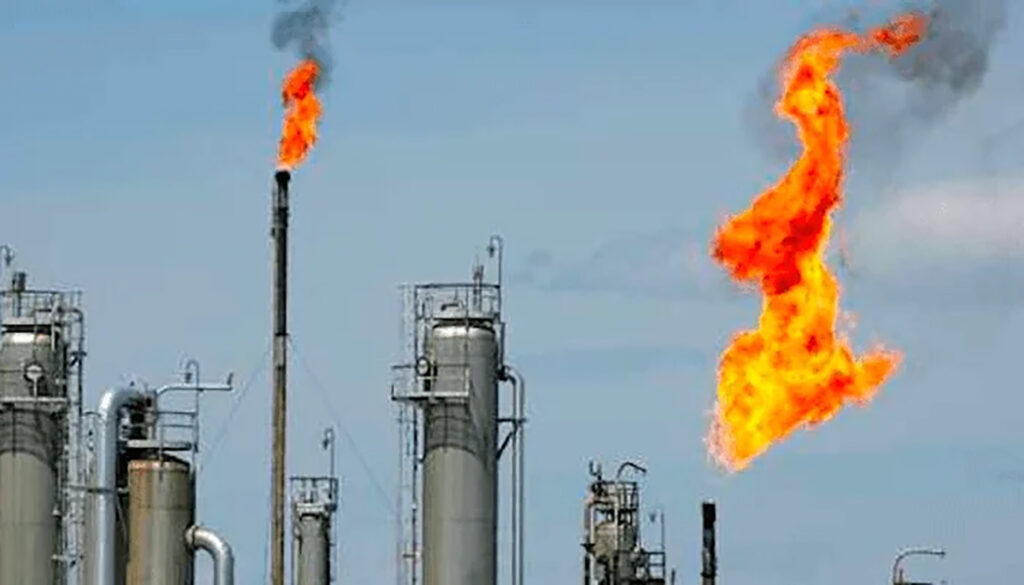
For ages, gas flaring stood as one of the starkest contradictions in Nigeria’s oil and gas story. In a country endowed with vast natural gas reserves yet plagued by energy poverty, billions of cubic feet of gas were routinely flared, polluting communities, wasting economic value and reinforcing the image of an industry long disconnected from sustainability. Today, that narrative is beginning to change.
The Nigerian Upstream Petroleum Regulatory Commission’s (NUPRC) issuance of Permits to Access Flare Gas (PAFG) to 28 companies under the Nigerian Gas Flare Commercialisation Programme (NGFCP) represents far more than a regulatory milestone. It signals a strategic recalibration of Nigeria’s upstream petroleum governance, one that seeks to convert environmental liability into economic opportunity, climate action into investment flows, and regulation into a catalyst for national development.
Held in Abuja on December 12, 2025, the permit issuance ceremony marked the formal transition of the NGFCP from design to execution. But beneath the official speeches and statistics lies a deeper story: of institutional reform under the Petroleum Industry Act (PIA), renewed investor confidence, and an emerging debate about who gets to participate in and benefit from Nigeria’s hydrocarbon future.
From Punishment to Participation
Historically, Nigeria’s approach to gas flaring relied heavily on penalties and moral suasion, neither of which proved sufficient to drive large-scale behavioural change. Operators often found it cheaper to flare gas than to invest in capture and utilisation infrastructure, while regulatory uncertainty deterred third-party investors.
The NGFCP was designed to flip this logic. Instead of forcing producers to bear the full burden of flare reduction, the programme opens the door to specialised third-party companies that can access flare gas, deploy technology, raise financing and monetise what was once wasted. In effect, it separates oil production from gas utilisation, allowing each to be handled by players best suited to the task.
According to the former NUPRC Chief Executive, Engr. Gbenga Komolafe, the issuance of PAFGs under the NGFCP represents “the transition from legacy challenges to market-driven solutions.” The programme, he explained, is aligned with Nigeria’s carbon-reduction commitments, energy security needs and broader economic objectives.
Crucially, the NGFCP was redesigned after the enactment of the PIA to improve transparency, commercial viability and global competitiveness. From over 300 initial expressions of interest, 139 applicants qualified for the request-for-proposals stage. Following a rigorous evaluation process widely acknowledged for its integrity, 42 bidders were awarded 49 flare sites, an outcome that has helped restore confidence in Nigeria’s licensing and allocation processes.
Rewriting the Economics of Gas Flaring
The projected impact of the NGFCP is significant by any standard. Between 250 and 300 million standard cubic feet per day (mmscfd) of gas currently flared is expected to be captured and commercialised. Environmentally, this translates to the elimination of approximately six million tonnes of carbon dioxide annually, an important contribution to Nigeria’s net-zero ambition and a critical metric in an era of climate-conscious investment.
Economically, the programme is expected to attract up to US$2 billion in investment and create more than 100,000 direct and indirect jobs across engineering, construction, logistics, processing, power generation and downstream distribution. These are not abstract projections; they represent livelihoods, skills transfer and the deepening of Nigeria’s domestic gas value chain.
The social implications are equally compelling. With an estimated 170,000 metric tonnes of LPG to be produced annually, the NGFCP could enable clean cooking access for about 1.4 million households. This directly supports Nigeria’s energy transition agenda by reducing dependence on firewood and kerosene, improving public health outcomes and slowing environmental degradation.
In addition, nearly 3 gigawatts (GW) of power generation potential is expected to be unlocked, positioning flare gas as a meaningful contributor to electricity supply for industries and communities that remain underserved by the national grid.
Presidential Backing and Policy Alignment
The renewed momentum behind the NGFCP is inseparable from the broader reform agenda of President Bola Ahmed Tinubu. NUPRC has consistently linked the programme’s progress to the President’s reform-driven approach to the petroleum sector, particularly the Executive Orders issued in 2024 that introduced fiscal incentives, tax rebates, cost-efficiency measures and strengthened local content directives.
These interventions are designed to improve Nigeria’s competitiveness at a time when global energy capital is increasingly selective. Gas projects, especially those linked to emissions reduction and energy access, now sit at the intersection of traditional hydrocarbon investment and climate finance. By aligning the NGFCP with these policy signals, Nigeria is attempting to position flare gas utilisation as both profitable and sustainable.
Engr. Komolafe underscored this point by noting that the issuance of PAFGs reflects the President’s vision of fully harnessing Nigeria’s hydrocarbon resources, not as stranded assets, but as drivers of industrialisation and inclusive growth.
New Players, New Possibilities
The 28 permit holders, ranging from Ace Energy Limited, Almina Resources and Amazon Energy to Tecnis EPS International, Zipora Gas and Stelog Gas, represent a diverse mix of indigenous firms, consortia and specialised energy companies. This diversity is intentional.
Gas flare sites vary significantly in scale, location and technical complexity. Some are best suited for LPG extraction, others for compressed natural gas, power generation or modular gas processing. By encouraging a broad range of participants, the NGFCP increases the likelihood that site-specific solutions will be deployed effectively.
To support implementation, NUPRC has established an NGFCP Forum and College of Awardees, creating a structured platform for coordination, knowledge exchange and problem-solving. The Commission has also deepened engagement with international financiers and technology partners, an acknowledgement that successful execution will require more than regulatory approvals.
Regulation as Stewardship of Destiny
Beyond economics and emissions, the NGFCP has also reignited conversations about the broader role of the regulator in shaping Nigeria’s future. Speaking at a related industry forum, retired Justice Adefope-Okojie offered a powerful reflection on the Commission’s mandate.
“The Commission doesn’t just process documents but destiny. With this great duty comes great responsibility,” she said, framing NUPRC’s role as not merely administrative but generational in impact.
While commending the Commission for conducting a transparent 2024 licensing round, the former judge urged NUPRC to deliberately expand youth participation in the forthcoming 2025 licensing round. According to her, the success of recent reforms presents an opportunity to open the door to a new generation of players.
“With the recent announcement of the 2025 licensing round, there is an opportunity for fresh players to step forward and demonstrate their capability. The time for the youth is now,” she said. Drawing parallels with Nigeria’s technology sector, she argued that young Nigerians, despite widespread frustration, have already proven their capacity to build globally competitive enterprises.
“They have done this in the tech space. They have produced the top unicorns in Africa. They can bring in the right partners to help Nigeria’s goal of increasing oil production,” she added, calling for youth inclusion to become a deliberate policy choice rather than a symbolic gesture.
Her comments resonate strongly within the context of the NGFCP. Many flare gas projects are modular, technology-driven and well-suited to innovative business models, precisely the kind of space where younger entrepreneurs can thrive if given access and regulatory support.
Execution: The Defining Test
Despite the optimism surrounding the permit issuance, NUPRC has been careful to temper expectations. The PAFGs signal the start of implementation, not its conclusion. Financing must be secured, infrastructure deployed, host community issues managed, and milestones met under strict timelines.
To ensure disciplined execution, the Commission has committed to close monitoring of milestone development agreements, regular performance reviews and proactive engagement to resolve emerging bottlenecks. This oversight will be critical in avoiding the pitfalls that have undermined past initiatives.
Taken together, the NGFCP represents a strategic signal to both domestic and international stakeholders. It suggests a regulator increasingly focused on outcomes rather than process, a government willing to align climate goals with commercial logic, and an industry beginning to see gas not as a nuisance but as a cornerstone of Nigeria’s energy transition.
If successfully implemented, the programme could redefine how Nigeria is perceived in global energy markets, not as a chronic flarer, but as a country capable of turning wasted resources into power, prosperity and participation.
In that sense, the NGFCP is more than a gas programme. It is a test of whether Nigeria’s reformed petroleum governance can truly process not just documents, but destiny.
