
By Saidu Abubakar
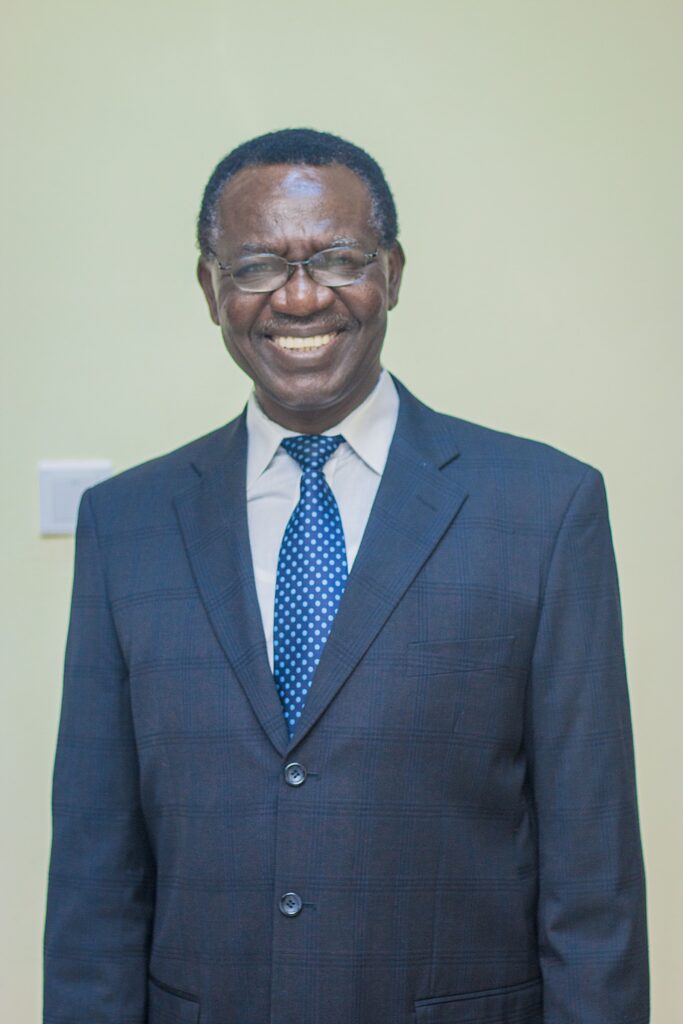
Professor Wumi Iledare, Professor Emeritus of Petroleum Economics and Principal Facilitator at the FUPRE Energy Business School, has described the recent appeal by the Chairman of OPEC’s Board of Governors, Adeyemi-Bero, for Nigeria to “stop exporting crude” as a timely wake-up call for policy re-direction and economic realism.
Prof. Iledare’s support for the Wake-Up call was contained in a statement he personally issued as a follow up to justify the importance of its economic sense.
Speaking at the NAPE Pre-Conference Workshop in Lagos, it would be recalled, Adeyemi-Bero challenged Nigeria to prioritise domestic refining and value creation after more than five decades of exporting unprocessed crude. He argued that nations such as Saudi Arabia, the UAE, Malaysia, and Brazil grew wealthier by developing industries around their oil and gas resources.
According to Prof. Iledare, “The message makes economic sense. Local refining reduces import bills, conserves foreign exchange, and supports job creation. Every barrel refined domestically adds value to GDP, while every imported litre of petrol drains it. It’s about value creation, not just volume production.”
He also noted that Nigeria’s long-standing pattern of exporting crude and importing refined fuel has exposed the economy to foreign-exchange shocks. The emergence of the Dangote Refinery, he said, is a turning point that has already helped ease FX pressure and enhance supply stability. “Without that facility, the government might have been forced to restore fuel subsidies,” he added.
However, Iledare cautioned against interpreting OPEC’s position literally. “Nigeria cannot simply stop exporting crude overnight. What OPEC is advocating is a managed transition — produce and refine more at home while gradually reducing dependence on raw exports. It’s a balance between aspiration and reality.”
He emphasised that this transition requires an enabling environment: efficient refineries, strong midstream infrastructure, and consistent policy. While the Petroleum Industry Act (PIA 2021) provides a framework for reform, progress remains slow due to weak implementation and policy inconsistency.

Commenting on Adeyemi-Bero’s proposal for some oil trade in naira, Prof. Iledare observed that currency strength rests on productivity and stability, not decrees. He suggested that partial crude trading within ECOWAS, denominated in naira, could be a practical regional step toward currency strengthening.
“Nigeria’s oil and gas sector has been long on vision but short on execution,” he stressed. “For decades, we have had announcement economics — bold declarations without consistent follow-through. What we need now is governance discipline and institutional coherence.”
He added that refineries cannot thrive in isolation; they require reliable power, logistics, and security. A stable investment climate must encourage both local and foreign capital in downstream and petrochemical ventures.
“OPEC’s message is not a reprimand; it is a reminder of opportunity lost and potential regained,” Prof. Iledare pointed out, adding that “Nigeria should not aim to stop exports altogether but to export refined value — petroleum products, petrochemicals, fertilizers, and knowledge.
“Once we process most of our crude locally, we will earn in both barrels and brains — transforming from a resource-dependent economy into a value-creating nation,” he concluded.
