
By Fred Ojiegbe
In recent years, Nigeria has witnessed an alarming number of petrol tanker accidents that have not only claimed lives but have also disrupted communities and strained the nation’s resources. Against this background, the Federal Government, through decisive regulatory intervention, has taken a commendable step towards safeguarding lives and enhancing road safety. The Nigerian Midstream and Downstream Petroleum Regulatory Authority (NMDPRA) recently announced a ban on 60,000-litre fuel tankers from operating on the nation’s roads, effective March 1, 2025 — a move that underscores the government’s commitment to mitigating risks associated with the transportation of petroleum products.
This article delves into the significance of this landmark decision, situates it within the historical context of tanker accidents in Nigeria, and highlights the multi-stakeholder collaboration that underscores the government’s proactive stance. By examining the measures taken, we aim to underscore the importance of decisive leadership in safeguarding public welfare and the long-term benefits of prioritizing safety over short-term economic gains.
Historical Context of Petrol Tanker Accidents in Nigeria
Nigeria’s struggle with petrol tanker accidents is not new. Over the past two decades, the nation has experienced numerous incidents that have tragically claimed lives and exposed vulnerabilities in the country’s transportation and regulatory frameworks. Available data of past occurrences reveals that since 2009, there have been 172 recorded accidents involving oil tankers, resulting in approximately 1,896 fatalities. These figures, while stark in their numerical representation, also tell a deeper story of systemic challenges that have plagued the transportation of hazardous materials across Nigerian roads.
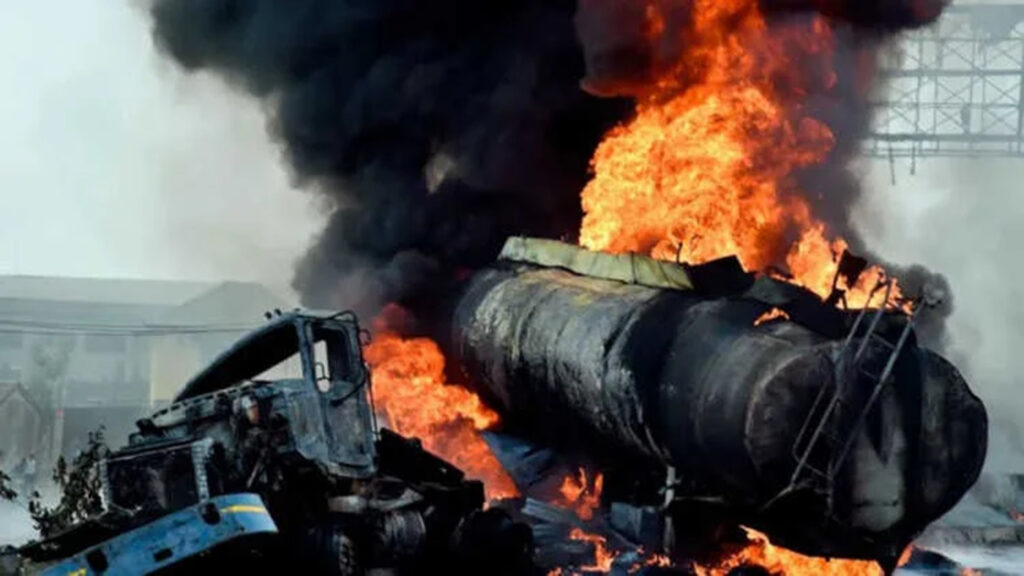
The inherent risks associated with transporting large volumes of petroleum are well documented. Tankers carrying 60,000 litres or more pose significant hazards not only because of the sheer quantity of fuel they transport but also due to the complexities involved in navigating congested and often poorly maintained road networks. Incidents in which fuel tankers have collided or overturned have led to explosive outcomes, with infernos engulfing vehicles and nearby properties, endangering lives and causing widespread panic. Such events have galvanized public opinion and put immense pressure on regulatory bodies to act decisively.
The tragic outcomes of these incidents serve as a sobering reminder of the cost of inaction. Each accident represents not just a statistic, but a human tragedy—families torn apart, communities disrupted, and substantial economic losses incurred. The cumulative effect of these accidents has underscored the urgent need for a robust regulatory framework that can pre-emptively address these risks. In this context, the government’s recent decision to ban oversized fuel tankers is a logical and necessary step towards rectifying a long-standing issue.
The Government’s Decision and Its Significance
On February 20, 2025, the NMDPRA announced a ground-breaking regulatory measure: effective March 1, 2025, no tanker with a capacity exceeding 60,000 litres would be permitted to operate on Nigerian roads. Additionally, the agency stipulated that by the fourth quarter of 2025, trucks with a capacity of over 45,000 litres would no longer be allowed to load petroleum products. This decisive move is a direct response to the rising trend of tanker-related accidents and the attendant loss of lives, which have reached critical levels in recent years.
Central to this decision was the formation of a technical committee comprising key stakeholders from diverse agencies and associations. Representatives from the Department of State Services (DSS), Federal Fire Service, Federal Road Safety Corps (FRSC), National Association of Road Transport Owners (NARTO), National Union of Petroleum and Natural Gas Workers (NUPENG), Standards Organisation of Nigeria (SON), and the Depot and Petroleum Products Marketers Association of Nigeria (DAPPMAN) came together to deliberate on a series of resolutions. Their objective was clear: to formulate strategies that would significantly reduce the frequency of tanker accidents and their associated fatalities.
Ogbugo Ukoha, the Executive Director for Distribution Systems, Storage, and Retailing Infrastructure at NMDPRA, emphasized that the committee’s consensus was not just a regulatory directive but a comprehensive strategy aimed at enhancing the overall safety of petroleum product transportation. By targeting tankers with excessive capacities, the government is addressing a critical risk factor head-on. The decision reflects an understanding that safety protocols must evolve in tandem with technological and infrastructural changes and that regulatory measures should be as dynamic as the challenges they seek to mitigate.
The significance of this move cannot be overstated. It represents an intersection of safety, accountability, and forward-thinking policy. The ban is designed not only to curb the immediate risks posed by oversized tankers but also to set a precedent for future regulatory interventions. By taking such decisive action, the Federal Government is sending a clear message: the safety of citizens is paramount, and no economic or logistical convenience will override the imperative to protect lives.
Furthermore, the ban is expected to drive improvements in the standards and maintenance of the tanker fleet. Operators will be compelled to adopt safer, more efficient tanker designs that comply with stricter regulatory standards. In doing so, the government is fostering an environment that encourages innovation in the transportation sector, ultimately contributing to a safer and more reliable distribution network for petroleum products.

Commending the Federal Government for Proactive Measures
It is imperative to recognize the Federal Government’s unwavering commitment to public safety as it embarks on this transformative journey. The decision to ban 60,000-litre fuel tankers from operating on roads is a bold and necessary move—one that demonstrates a proactive stance against a pervasive problem. In an era where economic pressures and infrastructural challenges often lead to compromises in safety, the government’s decision stands as a testament to its resolve to prioritize the well-being of its citizens.
At the heart of this commendable initiative is a spirit of collaboration. The formation of the stakeholders’ technical committee, which brought together a diverse array of agencies and industry experts, exemplifies the government’s recognition that complex problems require multi-faceted solutions.
By involving entities such as the DSS, FRSC, and NUPENG, among others, the government ensured that the decision was not made in isolation. Instead, it was the result of extensive consultations, rigorous deliberations, and a shared commitment to enhancing road safety.
This collaborative approach is particularly praiseworthy in a context where regulatory measures often face resistance from various quarters. For instance, the National Association of Road Transport Owners (NARTO) expressed concerns regarding the potential financial implications of the ban. With estimates suggesting that the measure could result in losses amounting to N300 billion due to the decommissioning of tankers, the economic stakes were undeniably high. However, rather than succumbing to pressures to maintain the status quo, the government remained steadfast in its resolve to curtail the preventable loss of life and property.
The courage to implement such a transformative policy, even in the face of potential economic backlash, is a clear indication of the government’s long-term vision. It reflects an understanding that the value of human life and public safety far outweighs immediate financial considerations. By taking decisive action, the government is not only mitigating current risks but is also paving the way for future regulatory frameworks that can address emerging challenges in the transportation sector.
Moreover, the government’s decision highlights an important paradigm shift in policy-making — a move away from reactive measures and towards proactive, preventative strategies. Instead of waiting for another tragedy to unfold before taking action, the government has chosen to act pre-emptively, leveraging data and expert insights to drive policy changes. This approach is emblematic of a mature, forward-thinking administration that is committed to safeguarding its citizens and ensuring that the nation’s infrastructure is resilient enough to meet the challenges of the future.
In commending the Federal Government, it is crucial to appreciate the broader implications of this decision. Beyond the immediate impact on tanker safety, the ban serves as a catalyst for a wider reform in the petroleum transportation industry. It is a clear signal that safety and innovation must go hand in hand and that regulatory frameworks must evolve to keep pace with the demands of a rapidly changing world. The government’s decisive action is a clarion call for other sectors to undertake similar reforms, ensuring that public safety remains at the forefront of policy-making.
The Road to Safer Transportation: Implementation and Future Prospects
Implementing a policy of this magnitude is undoubtedly a complex undertaking. The Federal Government is aware of the challenges that lie ahead in enforcing the ban on oversized fuel tankers. However, the strategic framework that underpins this decision offers a clear roadmap for its successful execution. By establishing detailed timelines and delineating specific responsibilities among the various stakeholders, the government is ensuring that the transition to a safer transportation regime is both smooth and effective.
One of the most commendable aspects of this initiative is the government’s emphasis on continuous stakeholder engagement. The technical committee, which played a pivotal role in shaping the policy, is expected to monitor the implementation process closely. This collaborative oversight mechanism will allow for timely adjustments and interventions, ensuring that any emerging issues are addressed before they can escalate into major problems. Such a dynamic approach to policy implementation is a hallmark of effective governance and is critical to the success of the ban.
Looking ahead, the implications of this regulatory measure extend far beyond the immediate reduction in tanker-related accidents. The ban is likely to spur a wave of innovations in tanker design and road safety measures. Operators will be incentivized to invest in newer, safer tanker models that comply with the updated regulatory standards. In turn, this could lead to the development of more advanced safety features, such as improved braking systems, enhanced structural integrity, and better fire suppression mechanisms.
Furthermore, the government’s decision is likely to set the stage for additional reforms in the petroleum transportation sector. There is growing recognition that a comprehensive approach to road safety must encompass not only vehicle standards but also infrastructure improvements, driver training, and enhanced emergency response capabilities. In this light, the ban on 60,000-litre tankers can be seen as a foundational step towards a broader overhaul of the regulatory framework governing the industry.
In response to concerns raised by industry stakeholders — particularly the significant financial investments involved in the operation of large-capacity tankers — the government has signalled its openness to exploring supportive measures. Proposals such as buy-back schemes or phased transition programs may be considered in the future to alleviate the financial burden on tanker owners. Such measures would strike a balance between ensuring public safety and mitigating the economic impact on the industry, thereby fostering a more resilient and sustainable transportation ecosystem.
Moreover, the decision to impose this ban is likely to have far-reaching positive effects on public confidence. Citizens and communities that have long borne the brunt of tanker-related accidents can now look forward to a future where the risks associated with fuel transportation are significantly curtailed. In essence, this regulatory intervention represents a critical investment in public safety, one that prioritizes human life over short-term economic considerations.
Ultimately, the Federal Government’s decision to ban 60,000-litre fuel tankers from operating on Nigerian roads marks a watershed moment in the nation’s ongoing efforts to enhance road safety and protect public welfare. By proactively addressing the systemic issues that have contributed to a high incidence of tanker accidents — and the resultant tragic loss of life — the government has demonstrated a commendable commitment to safeguarding its citizens. This bold measure, underpinned by extensive stakeholder consultations and a forward-thinking regulatory framework, is a testament to the government’s resolve to put safety first.
While the path to implementing such transformative policies is fraught with challenges, the collaborative spirit that has characterized this initiative offers a promising blueprint for future reforms. The ban not only curtails immediate risks but also paves the way for innovations in tanker design, infrastructure improvements, and comprehensive safety protocols. In doing so, it sets a precedent for other sectors, reaffirming the principle that proactive governance is essential in mitigating risks and ensuring sustainable development.
As Nigeria continues to grapple with the challenges of rapid industrialization and infrastructural inadequacies, initiatives such as the tanker ban serve as beacons of hope. They remind us that progress is not solely measured by economic growth, but by the quality of life and security that the state can provide for its people. In this light, the Federal Government’s recent intervention is not just a policy change; it is a reaffirmation of the social contract between the state and its citizens — a promise that every life is precious and that safety will always be paramount.
Looking forward, it is imperative that all stakeholders — from regulatory agencies to industry leaders and community representatives — work together to ensure that the promise of safer roads is fully realized. The journey towards a safer, more secure transportation network is a collective responsibility, one that requires unwavering commitment and continuous innovation. With the current measures in place and the promise of further reforms, Nigeria is well on its way to transforming its transportation landscape and, ultimately, saving countless lives.
